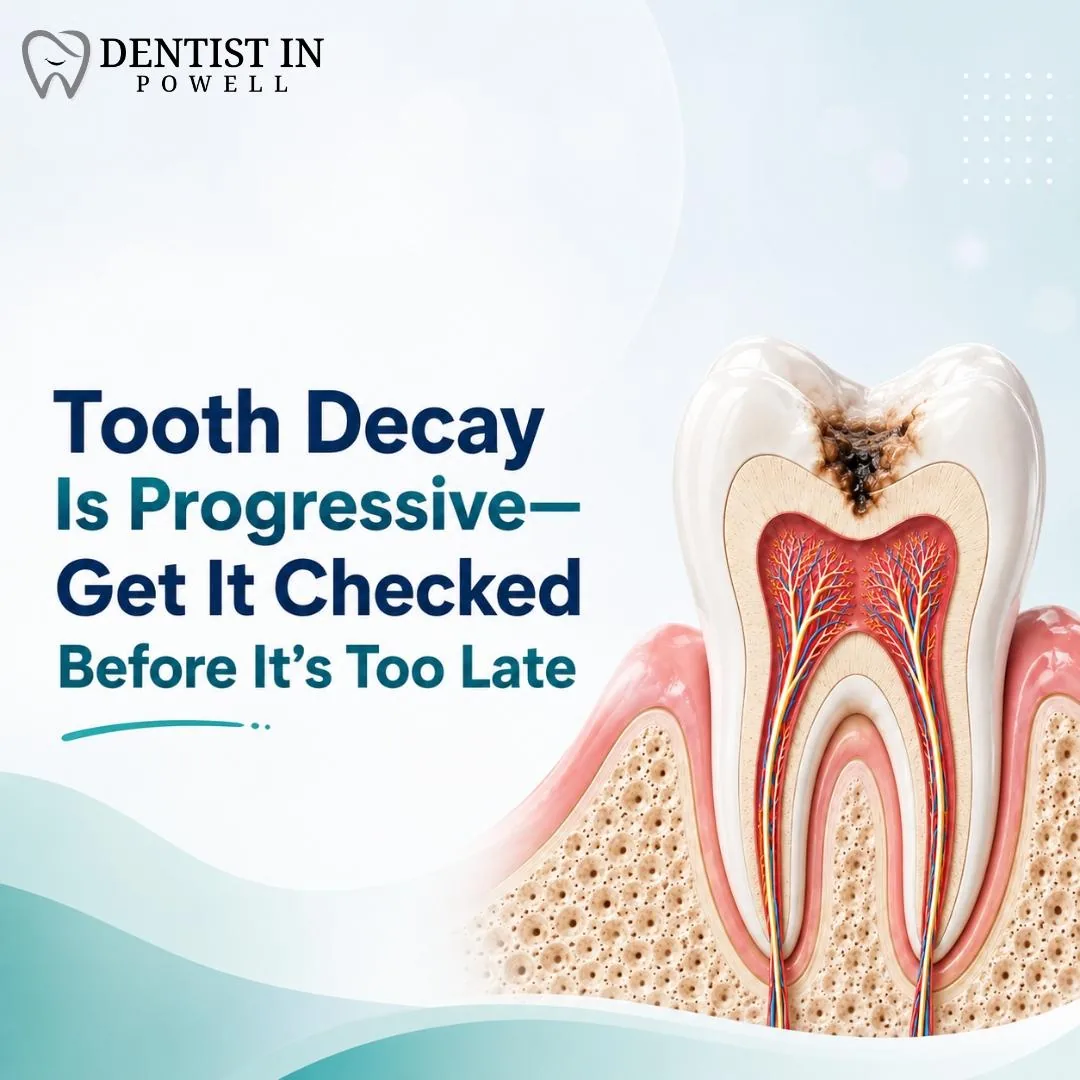
Many people feel a twinge of tooth sensitivity or spot a dark stain and then wait. They skip a dental checkup until the pain gets worse. Tooth Decay can start small and then grow into deep cavities that hurt the enamel and nerve.
Dentists say tooth decay is progressive, and yearly dental checkups catch problems early. Here you will know the stages of decay, common symptoms, how dentists use X-rays and exams for diagnosis, and which treatments stop damage.
Tooth decay is a progressive process that worsens over time if left untreated. It begins when bacteria attack the tooth enamel, creating weak spots. Initially, this stage may be reversible with proper care.
Symptoms like sensitivity to hot or cold foods often signal that decay has started. Visual signs also appear; people may notice white, brown, or black stains on their teeth.
As cavities grow, they cause more noticeable symptoms such as aches and pain. Without timely treatment from a dentist during regular dental checkups, the damage can deepen and lead to serious complications like infections.
Early intervention is crucial for maintaining oral health before advanced stages of tooth decay occur. This information sets the stage for understanding consequences and prevention strategies regarding cavities and dental care.
Untreated cavities can lead to serious consequences. Advanced tooth decay leads to complications like infections, which may spread beyond the tooth. This progression occurs after bacteria weaken tooth enamel and create a cavity that cannot heal itself without professional help.
Symptoms such as tooth pain or sensitivity can indicate worsening conditions and require immediate attention. Ignoring these signs delays necessary dental care and allows decay to worsen. Five distinct stages of tooth decay exist, with the earliest stage often reversible through proper treatment.
Later stages cause permanent damage that cannot be repaired at home or even by simple measures. Annual dental checkups help identify cavities early, allowing dentists to intervene before significant issues arise, preserving oral health and overall dental well-being.
Effective prevention and timely treatment strategies play a crucial role in combating tooth decay. Regular dental checkups serve as the best method to catch cavities early. Dentists can identify tooth decay during these visits through visual signs like white, brown, or black stains on teeth.
Many people experience noticeable symptoms when a cavity forms; this sensitivity can be a sign that immediate action is needed. Preventive care helps maintain strong tooth enamel and overall oral health. Good oral hygiene practices include brushing twice daily and flossing regularly to reduce plaque buildup.
If bacteria weaken the enamel, only professional intervention can repair it once a true cavity forms. Treating any signs of progressive decay immediately allows dentists to preserve tooth strength and prevent complications such as infections from developing later.
Tooth decay starts small and gets worse over time. Cavities form when plaque and acids wear the enamel. This progressive enamel damage can cause tooth pain.
Symptoms include tooth sensitivity, tooth pain, and visible spots or rough areas. You may feel sensitivity to hot or cold. These signs need a clear diagnosis.
Dentists do a dental checkup and use Xrays to find hidden cavities. They check for plaque, enamel damage, and signs of gum disease. The diagnosis guides the right dental treatment.
Treatment can range from restorations for cavities to caps for deep damage. Dentists give dental treatment for gum disease when needed. Quick treatment stops more tooth decay.
Practice daily oral hygiene to remove plaque. Keep regular dental checkups and follow preventive care tips. Use fluoride and clean between teeth. Good preventive care protects enamel and boosts dental health.
Tell us a little about what you need — we'll be in touch shortly.
4091 W Powell Rd #1, Powell, OH 43065, United States

Hi! I'm Tooth fairy! Your AI Assistant Ask me anything