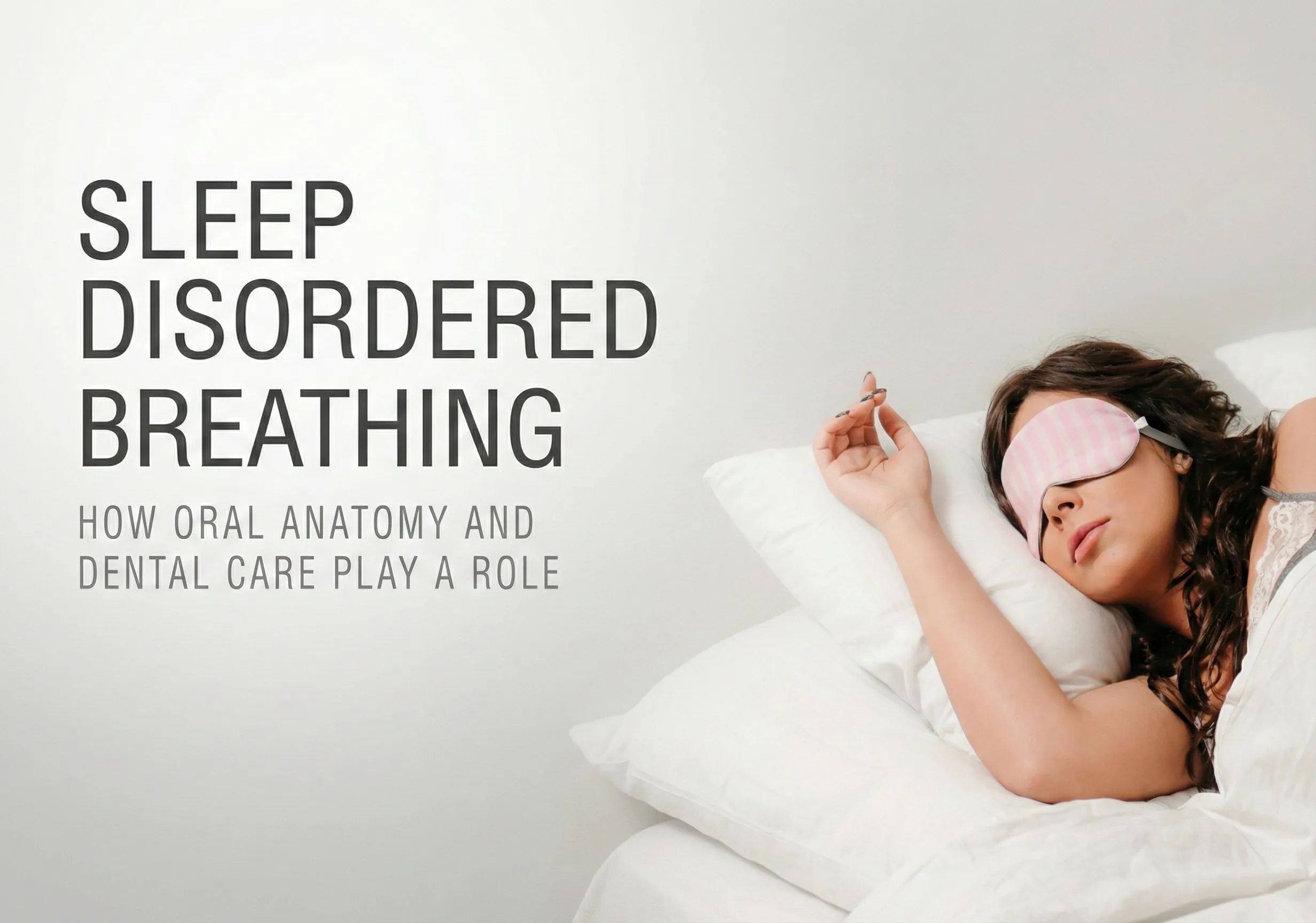
Sleep disordered breathing (SDB) is a common condition affecting both children and adults.
It is estimated to affect approximately 10% of children, 24% of adult males, and 9% of adult females.
This condition is often associated with other health issues such as hypertension, diabetes, heart failure, stroke, asthma, and gastroesophageal reflux disease.
At Dentist in Powell, we help patients understand how dental and oral anatomy can influence breathing during sleep and how timely evaluation can improve quality of life.
From an anatomical and dental standpoint, changes in the upper respiratory tract over time have contributed to sleep disordered breathing.
The human upper airway has evolved significantly, particularly the area above the vocal cords.
As part of this evolution:
These anatomical changes have contributed to airway narrowing and abnormalities that can interfere with normal breathing during sleep.
Sleep disordered breathing tends to:
Both children and adults may be affected, but symptoms and severity often progress over time if not addressed.
Patients with sleep disordered breathing may experience:
Management of sleep disordered breathing can be divided into non-pharmacological and pharmacological approaches.
Mandibular advancement devices are commonly preferred in dental management of sleep-related breathing disorders.
Certain behavioural modifications can help reduce symptoms:
At Dentist in Powell, our experienced dental team evaluates oral and jaw anatomy to identify factors contributing to sleep disordered breathing. The CDC's sleep health resources explain why untreated sleep disorders affect long-term health.
We guide patients on appropriate oral appliances — we already fit custom mouthguards and similar precision-fitted devices in-office — and coordinate care where required to improve breathing, sleep quality, and overall health.
If you experience loud snoring, restless sleep, or daytime fatigue, schedule a consultation with Dentist in Powell or call (614) 659-0018 to explore whether dental evaluation can help.
Better sleep starts with the right evaluation.
Sleep disordered breathing is a group of conditions in which normal breathing is interrupted during sleep. It is estimated to affect around ten percent of children, twenty-four percent of adult males, and nine percent of adult females. It is often associated with other health issues including hypertension, diabetes, heart failure, stroke, asthma, and reflux disease.
Common symptoms include loud and frequent snoring, restless or disturbed sleep, mouth breathing, excessive daytime tiredness, morning headaches or a sore throat, memory issues, and decreased libido. Both children and adults can be affected. Symptoms and severity often progress over time if the underlying cause is not addressed.
Yes, dental evaluation plays a role because oral and jaw anatomy influence how open the airway stays during sleep. A dentist can assess jaw position, palate shape, and airway space, guide patients toward suitable oral appliances, and coordinate care where required. Diagnosis of sleep apnea itself involves a medical sleep evaluation.
Mandibular advancement devices are worn during sleep and hold the lower jaw slightly forward, which helps keep the airway open. They are commonly preferred in the dental management of sleep-related breathing disorders. Other options include CPAP therapy, and BiPAP therapy in cases where CPAP is ineffective, alongside weight management and surgical approaches.
Weight loss helps, since the condition is more prevalent in people with increased body weight. Avoiding alcohol or smoking for at least four to six hours before bedtime reduces symptoms, and sleeping on your side rather than your back or stomach can keep the airway more open. Dietary control and weight management are standard first steps.
Tell us a little about what you need — we'll be in touch shortly.
4091 W Powell Rd #1, Powell, OH 43065, United States
Hi! I'm Tooth fairy! Your AI Assistant Ask me anything