Many parents dread the sound of a dentist saying extraction. A child can have a sore tooth, trouble chewing, or a big cavity. They want a fix that saves the tooth and eases the pain.
A pulpotomy treats the infected pulp in the crown while keeping the healthy root pulp. It can save a baby molar until it falls out on its own.
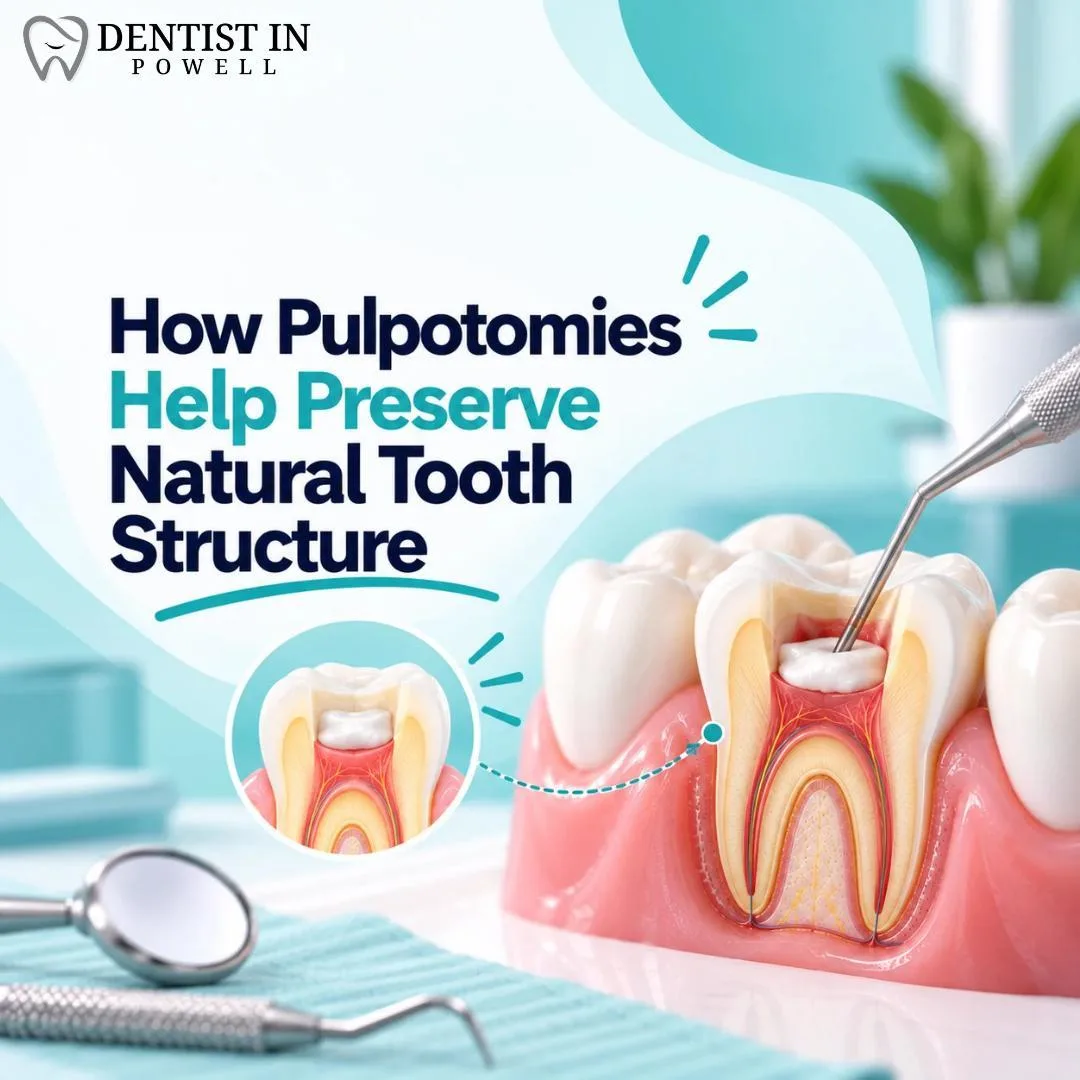
A pulpotomy treats infected dental pulp in a primary tooth while keeping the healthy root pulp intact. The dentist removes only the infected coronal pulp from the crown portion and fills the space with a restorative material.
This dental procedure works well in pediatric dentistry, especially for decayed baby molars, and it eases pain from tooth decay and infection. A pediatric dentist who performed dozens of pulpotomies reported quick recovery and preserved chewing function after treatment.
Children keep tooth alignment and appearance because the treated tooth stays in place until it naturally falls out. Dentists often place a crown restoration after pulp therapy to strengthen the tooth and lower the chance of further cavities reaching the dental pulp.
This approach avoids early extraction and reduces the need for a root canal on primary teeth, and it supports oral health and tooth preservation in childhood development. The next section explains how pulpotomies protect natural tooth structure.
Dentists take out the infected part of the tooth while leaving healthy tissue untouched. This dental procedure protects most of your natural tooth, helping you stay in the smile game longer.
A pulpotomy involves the precise removal of infected coronal pulp only. This part of the tooth is where decay and infection usually occur. By targeting just this area, the procedure helps save the healthy radicular pulp located in the roots.
Keeping this vital tissue intact supports natural tooth vitality. The dentist removes decayed tissue with care but leaves behind what remains healthy.
After extracting the infected pulp, they fill the area with a restorative material. This quick fix allows children to keep their primary teeth longer, avoiding early extractions. Pulpotomies are especially useful for baby molars that often face severe decay.
By preserving these teeth, kids can maintain normal chewing function and help their overall oral health flourish during development.
Pulpotomies focus on saving the healthy radicular pulp while removing the infected coronal pulp. This procedure targets only the damaged part of the tooth, keeping the vital root tissue safe.
By preserving this healthy pulp, dentists help maintain tooth vitality and function. The root pulp supports future growth and helps prevent complications later on.
Keeping healthy radicular pulp minimizes pain for young patients suffering from tooth decay or infection. It also allows them to keep their natural teeth longer, until they are ready to fall out naturally.
With a successful pulpotomy, children enjoy improved oral health and can continue eating and playing without discomfort.
Pulpotomies offer great benefits for keeping teeth healthy. They help maintain the tooth’s position and function, which is crucial for young smiles.
A pulpotomy helps keep a child’s teeth aligned and functional. By removing only the infected coronal pulp, it protects the healthy radicular pulp. This approach allows kids to maintain their bite and chewing ability. It also prevents the need for more extensive procedures later on.
Keeping primary teeth is crucial for oral health. These teeth guide adult ones into position. If decay leads to extraction, it can cause misalignment, which may lead to future dental issues.
A crown restoration often follows a pulpotomy, strengthening the tooth structure and reducing complications later on.
Pulpotomies play a key role in keeping primary teeth intact. They effectively treat infected pulp tissue without the need to extract the tooth. By focusing on removing only the infected coronal pulp, this procedure preserves healthy radicular pulp. This approach helps save decayed baby teeth, especially molars, from an early exit.
Kids benefit greatly from pulpotomies. These dental procedures alleviate discomfort caused by tooth decay and infection while maintaining normal dental function. After treatment, dentists often add a crown to strengthen the tooth structure further and reduce future complications.
As a result, children can keep their smiles bright throughout childhood development without worrying about losing crucial teeth too soon.
A pulpotomy is a dental procedure that removes the infected part of a tooth's pulp. It helps save the natural structure of the tooth while keeping it functional and healthy.
By removing only the damaged pulp, a pulpotomy allows dentists to maintain most of the tooth's original material. This keeps your smile intact and prevents further complications down the road.
Children often need this treatment when they have deep cavities or trauma to their baby teeth. Adults might also require it for certain situations involving permanent teeth.
Most patients feel little to no pain during the procedure because local anesthesia is used. Afterward, some discomfort may occur, but it's usually manageable with over-the-counter medication.
Tell us a little about what you need — we'll be in touch shortly.
4091 W Powell Rd #1, Powell, OH 43065, United States

Hi! I'm Tooth fairy! Your AI Assistant Ask me anything